Read: 1 Kings 1:1-53, Acts 4:1-37, Psalm 124:1-8, Proverbs 16:24
There is salvation in no one else! God has given no other name under heaven by which we must be saved.
Acts 4:12
Here’s the text with corrected grammar:
Relate: What is in a name? According to various baby name websites, my first name means “high and noble,” “strong,” or “virtuous”—take your pick. But although that is the name on my birth certificate, the name I go by means “victory” or “victorious” in Hindi. In Sanskrit, it is a combination of two words: Beej (seed) and jai (victory). However, according to one site, the name is French and means “handsome jay bird.” That website sounds suspiciously similar to the nonsense ChatGPT produces when it is too proud to admit, “We have no idea what your name means, and we’re just going to spit out random nonsense that sounds legitimate and hope you don’t notice.”
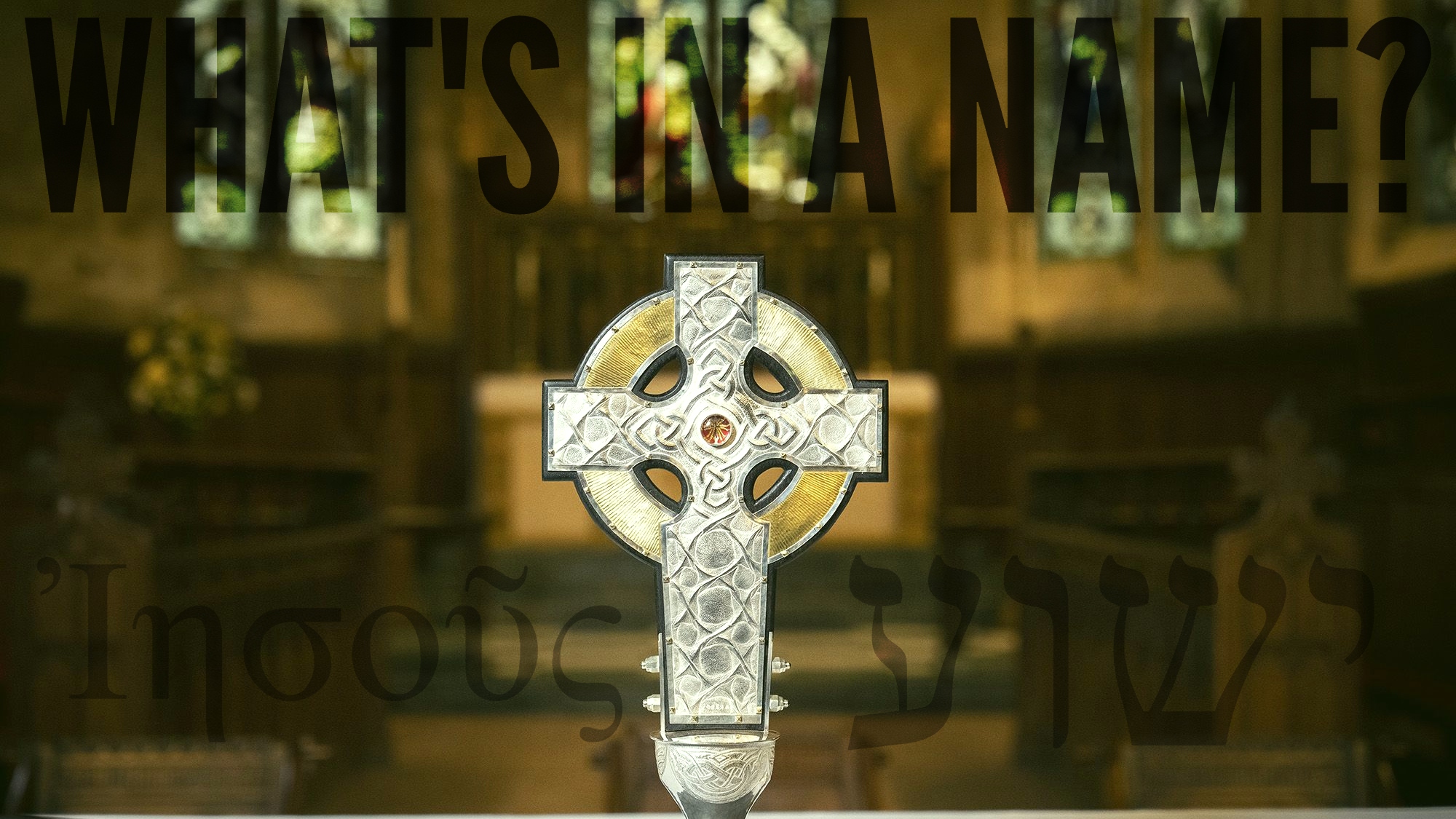
But what about Jesus’ name? Acts 4:12 states that “there is no other name under heaven given among mortals by which we must be saved.” But does this mean his literal name? If so, then all of us English speakers are going to hell. After all, most Americans say the name JEE-zuhs. This isn’t anywhere close to the name He went by. This is an exact spelling of His name from German, except in German, it would be pronounced YEY-zoos. While the Germans are a bit closer to correct, they aren’t actually saying it right either. They simply transliterated the Latin version of His name, which is Iesus (YEH-sus). But Jesus wasn’t Latin. From the writing of the Latin Vulgate all the way to the advent of the printing press and beyond, this Latin version would be the name everyone knew for our Savior, but it isn’t the name in the Bible. The name in the Bible is Greek. What we see in the Bible is Ιησούς. Granted, the pronunciation is very close to the Latin. Galilee was a fairly polyglot region for its time, so Jesus probably did know some people who called Him Ιησούς, but it still wasn’t the name His mother (and Father) gave Him. More often, Jesus would have been called יֵשׁוּעַ or ܝܫܘܥ. Those are the Hebrew and Aramaic spellings that would be Latinized as Yeshu’ and Yisho’, respectively. More commonly, we will see it today as Yeshuah. Interestingly enough, the name was incredibly common in Jesus’ time. It appears in Josephus’ histories, representing dozens of different people. In fact, there is even a book of the Bible that shares His name.
React: So if Jesus’ name alone saves, is that referring to the English, German, Latin, Greek, Hebrew, or Aramaic version? What about Spanish? Russian? Chinese? If His name alone saves, does it matter which version of the name we are using? What about the other people who shared His name, like Jesus Barabbas, who was a freed criminal when Jesus was crucified? Or Jesus the High Priest? Or Jesus, the other High Priest? Or the Jesus who succeeded Moses and led the Israelites into the Promised Land? Or the Jesus who…
Or perhaps when we say His name alone saves, we aren’t speaking specifically about His name, its pronunciation, or even its meaning (Yhwh is salvation). Far more than it does today in the modern West, when the Bible says “name,” it is referring to the character and nature of a specific individual. Shakespeare said, “A rose by any other name would smell as sweet.” It is the nature of the rose to smell so, no matter what word we use to call it. In the same way, it is in the nature of Jesus to save. No matter what spelling or pronunciation, even if it is as messed up as we have it in English, Jesus still saves. It is His nature. It is His nature alone. Nothing else, no one else, even if they share His nomenclature, can do so.
Respond:
Dear Jesus,
In Your Name there is salvation. It is Your nature. It is who You are. I am so grateful that through Your Name, I can be saved. I recognize that there is no other name that can do so. I recognize that there is no adding to Your name in that salvation. You and You alone are all that saves. As I go about my life, help me to bring You. Help me to reflect Your character and nature. help me to carry Your Name so that people, when they see me, will see You.
Amen.
 THE RIVER WALK
Wow, I Speak Jesus. This is my morning ritual song on my working hours like about a month already.
The reflection on the significance of Jesus’ name in different languages and cultures is thought-provoking. The diversity of pronunciations and transliterations of His name throughout history raises interesting questions about the essence of salvation tied to His name.When Acts 4:12 declares that there is no other name under heaven by which we must be saved, it is not solely referring to the specific pronunciation or spelling of Jesus’ name in different languages. Rather, it emphasizes the unique and exclusive role of Jesus as the Savior of humanity. His name represents His divine nature, His redemptive work on the cross, and His power to bring salvation to all who believe in Him.The various versions of Jesus’ name in different languages and historical contexts do not diminish the power and efficacy of His name in bringing salvation. Whether one calls Him Jesus, Yeshuah, Yisho’, or any other variation, what truly matters is the character and nature of Jesus Himself. It is His essence, His sacrificial love, and His victory over sin and death that make salvation possible through His name.Therefore, when we pray in the name of Jesus or proclaim salvation through His name, we are acknowledging His unique role as the Savior and Redeemer. It is not about the specific linguistic form of His name, but about the person behind the name – the Son of God who came to earth to offer salvation to all who believe in Him.May we always remember the power and significance of the name of Jesus, reflecting His character and nature in our lives as we share the message of salvation with others. Amen.
To avoid that traffic jam of name labels I simply refer and call to Him by One which I believe covers all: “My Lord and My God”.
I know then no matter my background or preferred and most used language that HE hears me.
-Alan